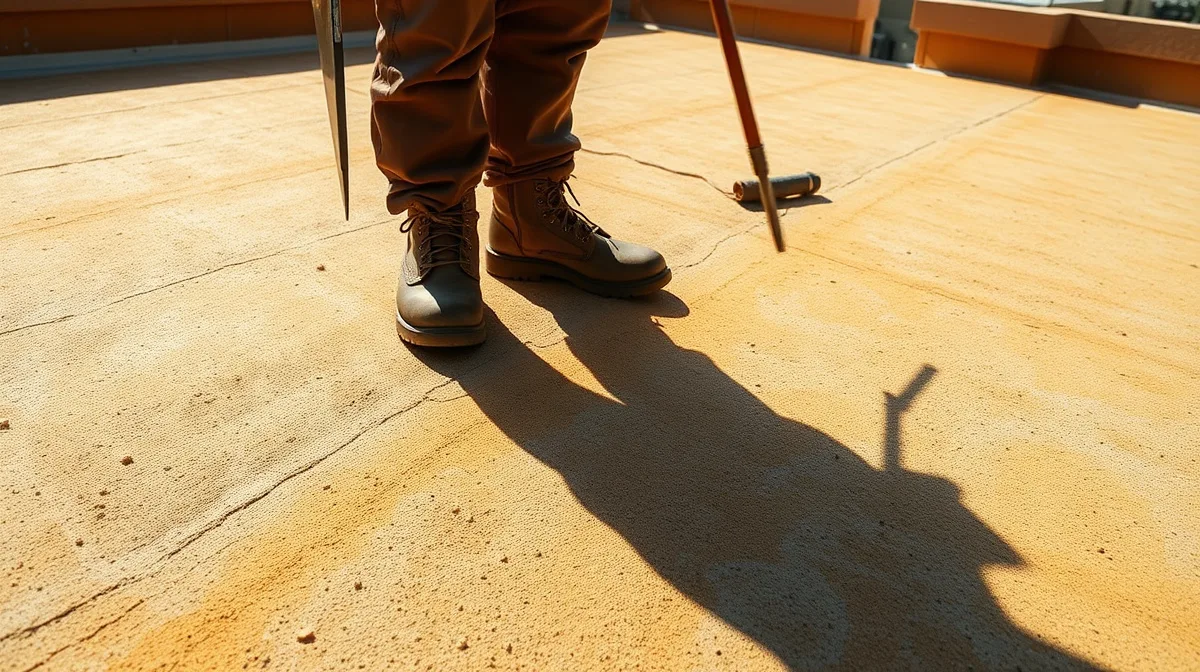
Monsoon Season Roof Damage: How Arizona Property Owners Can Protect Their Roof
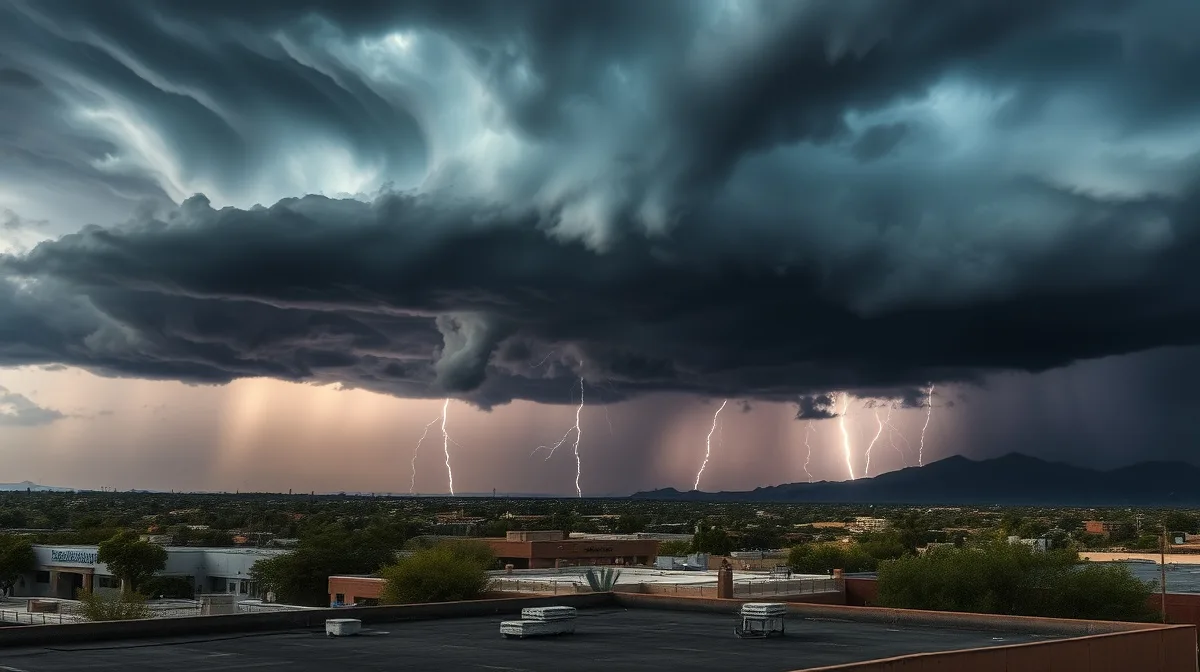
Why Arizona's Monsoon Season Puts Extra Stress on Your Roof
From roughly July through September, Arizona's monsoon pattern turns a mostly dry desert climate into a source of some of the most concentrated roof stress a roof will see all year. Storms often build fast — a wall of dust ahead of the rain, then wind gusts and a short but intense downpour that can dump more rain in thirty minutes than the roof saw in the previous month. That combination of wind, wind-driven debris, and sudden heavy rainfall is hard on any roof, but it's especially hard on the flat and low-slope roofs that make up most of Arizona's commercial buildings and a large share of desert-contemporary and ranch-style homes.
Flat roofs don't shed water the way a pitched shingle roof does — they rely on tapered slope-to-drain design and clear drains or scuppers to move water off the surface before it ponds. A monsoon downpour can overwhelm a drain that's partially blocked with dust, leaves, or debris in seconds, and standing water left sitting on a roof for hours after a storm is one of the fastest ways to find a weak point in the membrane. Add in wind gusts that can lift loose flashing or drive gravel and branches across the surface, and it's easy to see why a roof that looked fine in June can show real problems by September if it wasn't ready for the season.
Pre-Monsoon Roof Inspection Checklist
The best time to deal with monsoon roof damage is before it happens. A short walkthrough in May or early June — before the first real storm hits — catches most of the issues that turn into leaks once the rain starts. Here's what to check:
- Clear drains, scuppers, and gutters of dust, leaves, and debris so water has a clear path off the roof
- Look for standing water that hasn't drained within 24-48 hours of the last rain — a sign of a low spot or drainage issue
- Inspect the coating for chalking, cracking, or thinning, especially on south- and west-facing slopes that take the most UV exposure
- Check flashing and parapet wall caps for loose seams, gaps, or lifted edges where wind can get underneath
- Inspect penetrations — HVAC curbs, vent stacks, skylights — for gaps or separated sealant around the base
- Trim back trees and secure or remove loose materials near the roofline that wind could turn into debris
- Schedule a professional inspection if the roof is due, or if last year's monsoon left anything unresolved
Signs of Storm Damage to Watch for After a Monsoon Storm
Even a well-maintained roof is worth a quick look after a significant storm, particularly one with strong wind gusts or hail. Some damage is obvious; some only shows up as a slow leak weeks later. Watch for:
- Ponding water that's still sitting more than 48 hours after the rain stopped
- New cracks, blisters, or soft, spongy-feeling spots in the roof surface
- Small dimples or dings in the coating, especially after a storm with hail
- Torn, lifted, or separated seams on membrane roofing (TPO, EPDM, or built-up systems)
- Loose or displaced flashing, metal edge trim, or parapet cap detail
- Interior ceiling stains, discoloration, or a musty smell in the days after a storm
- Debris embedded in the roof surface or granule loss around drains and low points
When to Call a Roofing Contractor
Small issues after a storm — a soft spot, a dinged coating, water that's slow to drain — are far cheaper to address as a spot repair than as an emergency call three storms later once the substrate has taken on water. If you see any of the signs above, or if you're not sure what you're looking at, it's worth having a licensed contractor take a look before the next storm rolls through. Reach the crew at 844-967-5247 or josh@contractorschoiceagency.com for a free on-site inspection.
Why Seamless SPF Membranes Handle Heavy Rain Better Than Seamed Systems
Spray polyurethane foam roofing is applied on-site as a fluid that expands and cures into a single, monolithic membrane — there are no seams, laps, or glued joints anywhere on the roof surface. That matters a lot during monsoon season, because seams are almost always where a traditional flat roof fails first. TPO, EPDM, and built-up systems depend on heat-welded, glued, or mechanically fastened seams to stay watertight, and repeated wind uplift and thermal cycling through Arizona's heat-to-storm swings gradually works those joints loose. A seamless SPF roof simply doesn't have that failure point. The foam is also sprayed to a tapered slope, so a roof that previously had flat, ponding-prone sections can be corrected to drain properly, which directly addresses the standing-water problem that causes most monsoon-related leaks.
SPF's self-flashing quality is another advantage in storm season — the foam and topcoat wrap continuously around vents, curbs, and penetrations rather than relying on separate flashing pieces that can work loose in high wind. And if a storm does cause localized damage — a hail ding or debris puncture — a foam roof can typically be spot-repaired in that one area rather than requiring a section of membrane to be cut out and replaced, which is often the case with seamed systems. Combined with a silicone or acrylic topcoat that resists ponding water and UV breakdown, a properly installed and maintained SPF roof is built to take Arizona's monsoon cycle year after year rather than just survive it.
Frequently asked questions
Yes — a properly installed SPF roof is sprayed with a tapered slope so water drains toward the roof's low points and drains instead of pooling, and the seamless membrane has no seams for wind-driven rain to work into. This makes it one of the better-performing systems for Arizona's short, intense monsoon downpours.
If the storm included strong wind gusts or hail, a quick visual check within a few days is a good idea, and a professional inspection within one to two weeks if you notice ponding water, coating damage, or any interior signs of a leak. Catching minor damage early keeps it a spot repair instead of a bigger fix later.
Hail can leave small dimples or dings in an SPF roof's topcoat, but because the underlying membrane is monolithic, that damage is usually limited to the impact point and can be spot-repaired without replacing a whole section — unlike seamed membrane roofing, where hail or debris impact can compromise a seam and require a larger repair.
Ready for a free roof quote?
Tell us about your roof and we'll build a clear, no-pressure quote.