Spray Foam Roof Installation in Arizona
A new spray polyurethane foam roof is sprayed on-site as a single seamless membrane, tapered to pitch water off dead-flat decks and finished with a protective topcoat — built for Arizona's heat, UV, and monsoon cycles from day one.
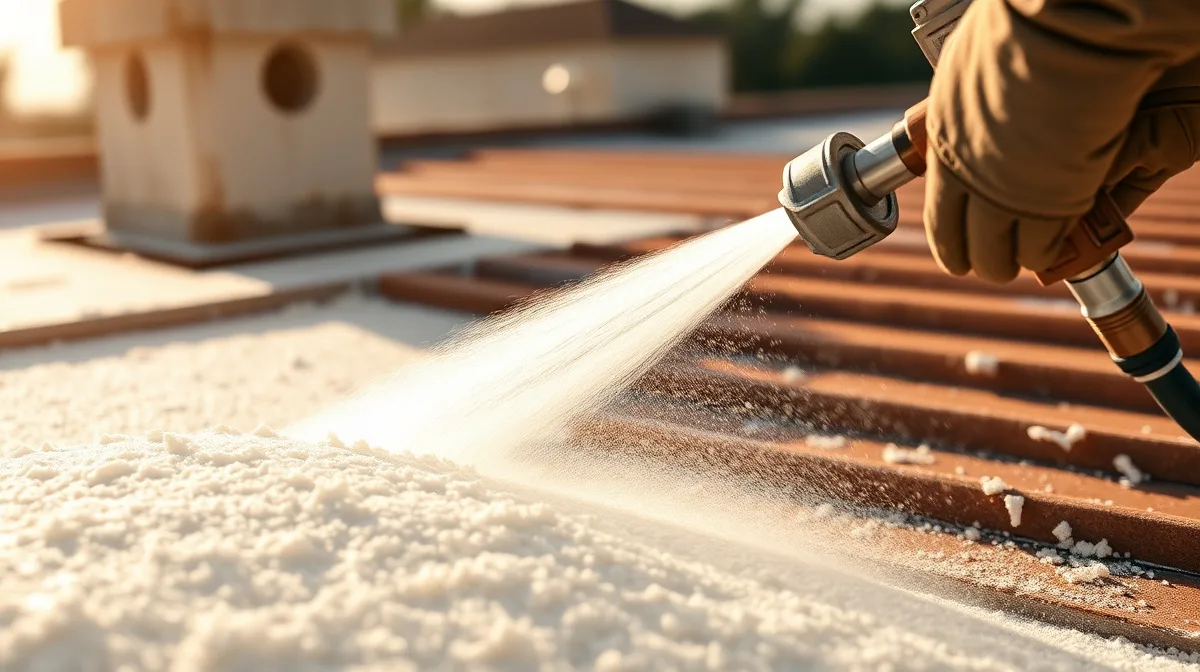
Spray foam roof installation starts with polyurethane foam sprayed directly onto your roof deck, where it expands and cures into a continuous, seamless membrane instead of the overlapping sheets, seams, and fasteners used in traditional roofing systems. For flat and low-slope roofs — the majority of commercial buildings and a large share of Arizona's ranch and desert-contemporary homes — that seamlessness matters more than almost anything else on the spec sheet, because seams are where roofs fail first. Before any foam goes down, we inspect the existing roof deck and substrate to determine whether it's a candidate for direct application over a sound, compatible surface, or needs a tear-off first. Once the deck is prepped — cleaned, dried, and any wet insulation or damaged decking addressed — foam is applied in a controlled thickness and tapered to create positive slope toward drains and scuppers, even on decks that were built dead flat. A protective topcoat goes on last, sealing the foam from UV exposure and giving the roof its walkable, weather-resistant surface.
Arizona is a demanding environment to install a roof into, and new SPF systems are built with that in mind from the first pass of foam. Roof surface temperatures here regularly climb past 150°F in summer, and that daily heat-up-and-cool-down cycle is exactly what stresses the seams, fasteners, and flashing details in TPO, EPDM, and built-up roofing — the same failure points a seamless foam membrane simply doesn't have. Closed-cell SPF also carries the highest R-value per inch of any common roofing material, so a new foam roof is doing real insulation work on top of weatherproofing work, which shows up directly in summer cooling bills. Then there's monsoon season: July through September brings heavy, fast downpours, and a dead-flat or poorly-sloped deck will pond water regardless of material — the tapering built into a new SPF install is what actually solves that, directing water to drains instead of letting it sit. Properly installed and maintained, an SPF roof is commonly rated for 40-50+ years of service life, with the topcoat recoated roughly every 10-20 years to keep it under warranty — the foam itself doesn't wear out the way a shingle or membrane does.
Why property owners choose it
- A monolithic, seam-free membrane eliminates the lap joints and fastener penetrations that are the first point of failure on seamed commercial roofing.
- Tapered foam application creates real positive slope-to-drain on roofs that were built dead flat, solving ponding-water problems that plague many older Arizona commercial buildings.
- Closed-cell SPF delivers the highest R-value per inch of any common roofing system, cutting summer cooling loads in a climate where the AC bill is often the biggest utility expense.
- Installation is typically completed in days rather than weeks, with far less noise and disruption than a traditional tear-off and re-roof.
- A reflective topcoat, acrylic or silicone, is applied as part of the same install, giving the roof UV protection and a cool-roof surface from day one.
- Properly maintained, a new SPF roof is commonly rated for 40-50+ years of service life, with only a topcoat recoat needed every 10-20 years to keep it under warranty.
How Spray Foam Roof Installation Works
Every installation starts with an on-site inspection of the existing roof deck and substrate — what it's made of, how it's holding up, and whether moisture has already gotten into the insulation layer underneath. That inspection determines whether we can spray directly over the existing roof or need to remove it first; a sound, dry, compatible substrate can often skip a costly tear-off, while wet insulation or structural damage means it has to come off. From there, closed-cell polyurethane foam is sprayed in controlled passes, building to a specified thickness and tapering the foam so a flat deck ends up with real positive slope toward drains and scuppers. Once the foam has cured, a protective topcoat — acrylic or silicone, chosen for the application — is rolled or sprayed over the entire surface, sealing the foam from UV exposure and giving the finished roof its walkable, weather-ready surface.
Foam density and thickness are checked throughout the spray day, not just at the end — core samples and thickness gauge readings confirm the system matches the specified R-value and slope before the crew moves on to topcoat. That same attention carries into the topcoat stage, where mil thickness is verified against manufacturer requirements, since an under-applied topcoat is one of the most common causes of premature UV wear on an otherwise sound foam roof. A final walk-through inspection closes out the job, confirming drainage performs as designed and documenting the completed system for warranty registration.
- Roof deck and substrate inspection
- Re-cover vs. tear-off decision
- Foam application in controlled, measured passes
- Slope-to-drain tapering for proper drainage
- Protective topcoat application and final inspection
Why a Seamless Membrane Outperforms Seamed Roofing in Arizona's Heat
Traditional low-slope roofing systems — TPO, EPDM, built-up tar and gravel — are built from sheets or layers joined at seams, and seams are mechanically fastened or heat-welded joints that have to survive the same daily expansion and contraction the rest of the roof does. In Arizona, where roof surface temperatures swing from cool desert nights to 150°F-plus summer afternoons, that daily cycling is exactly what works seams loose over years of service, and once a seam opens, water has a direct path in. A sprayed foam roof doesn't have that vulnerability — because it's applied as a single continuous membrane, there's no seam to fail in the first place, and the foam expands and contracts as one piece rather than pulling at joints. The same install also solves Arizona's other roof-killer, monsoon ponding water, by tapering foam to a real slope instead of leaving water sitting on a dead-flat deck through a storm season that runs July through September.
That insulation performance compounds over the life of the roof: closed-cell SPF carries the highest R-value per inch of any common roofing material, so a new foam roof is reducing heat gain through the deck at the same time it's waterproofing it. Pair that with a reflective topcoat — white or light-colored acrylic or silicone — and the roof surface itself runs cooler under direct sun, which takes pressure off rooftop HVAC units already working overtime through an Arizona summer. For property owners tracking utility spend or homeowners just tired of a hot attic, that combination of seam-free waterproofing and built-in insulation is the real differentiator over a seamed system that only replaces the water barrier.
What to Expect During Installation
Spray foam needs the right weather window to cure correctly — dry conditions, manageable wind, and surface and ambient temperatures within the manufacturer's application spec — so scheduling is built around Arizona's forecast rather than a fixed calendar date. During monsoon season, that means watching multi-day forecasts closely and timing spray days between storm systems rather than working straight through a wet week; foam applied before rain has a chance to cure properly won't perform the way it's supposed to. Outside of monsoon season, Arizona's long stretches of dry, stable weather actually make it one of the more favorable climates in the country for foam application, which is part of why installation timelines here tend to be shorter and more predictable than in humid or rainy regions.
Most residential and light commercial installations are completed in a matter of days once spraying begins, and because the system is sprayed rather than mechanically fastened, there's far less noise, debris, and foot traffic than a traditional tear-off and re-roof generates. Occupied homes and businesses can typically stay in use throughout, with access to the roof itself restricted while foam cures and topcoat sets. Every new installation is backed by a manufacturer and workmanship warranty, and keeping that warranty active long-term comes down to one thing: recoating the topcoat on schedule, typically every 10-20 years — a small fraction of the cost of the original installation, and the single biggest factor in whether a roof actually reaches its 40-50+ year potential lifespan.
Ideal for
- Flat or low-slope commercial buildings — warehouses, retail centers, office parks — due for full re-roofing.
- Homeowners with flat-roof additions, casitas, or full flat-roof homes common in Arizona ranch and desert-contemporary construction.
- New construction projects where SPF is being specified as the primary roofing system on a flat or low-slope deck.
- Property owners whose existing roof has failed seams, chronic leaks, or ponding water that a patch or recoat can no longer solve.
- Anyone comparing new SPF installation against a traditional tear-off and replacement with TPO, EPDM, or built-up roofing.
What affects the cost
Roof Installation questions, answered
Most residential and light commercial roofs are sprayed and topcoated within a few days once work begins, though scheduling depends on roof size, access, and the weather window needed for the foam to cure properly. Larger commercial projects take longer but are typically phased so the building can stay occupied throughout.
Foam can often be sprayed directly over a sound, dry, compatible existing roof, which is faster and less expensive than a full tear-off. We determine this during the on-site inspection — trapped moisture, structural damage, or multiple existing roof layers usually mean tear-off is the right call instead.
New installation typically runs $6-$12 per square foot for residential and light commercial roofs, and $3.50-$8 per square foot for larger commercial projects, depending on roof condition, access, and the system specified. A free on-site estimate is the only way to get an accurate number for your specific roof.
Spraying is quieter and faster than a traditional tear-off and re-roof, and most homes and businesses can stay occupied throughout the process. Roof access is restricted while the foam cures and the topcoat sets, but that's typically a matter of days, not weeks.
New installations come with a manufacturer and workmanship warranty, with specific terms depending on the foam thickness and topcoat system installed. Keeping that warranty active long-term just requires recoating the topcoat on schedule, roughly every 10-20 years.
Roof Installation done right, by a dedicated Arizona SPF crew
Roof Installation isn't a commodity — the result depends entirely on how carefully it's planned and applied for your specific property and Arizona's heat-and-monsoon climate. We assess what your roof actually needs, prep the substrate properly, and apply to the depth and tapering your roof requires, so the work delivers the durability and savings it's supposed to. No shortcuts, no builder-grade rush.
We serve the greater Phoenix metro — Scottsdale, Mesa, Tempe, Chandler, Gilbert, Glendale, Peoria, Surprise, Avondale, Goodyear, and Queen Creek — plus Tucson and Casa Grande. Every job starts with a free, no-pressure roof inspection.
Just as important, we treat your roof like the system it is. Substrate condition, foam depth, slope-to-drain tapering, and topcoat selection all interact, and getting one right while ignoring the others leaves durability and savings on the table. When we scope your roof installation, we look at how it fits the whole picture — so the finished result performs the way it should, holds up through both 150°F+ summer roof temperatures and monsoon-season downpours, and actually lowers the cooling costs you feel every month. That whole-roof mindset, plus honest advice about what your property truly needs, is what Arizona property owners count on us for.
Free inspection
We evaluate your roof and give you a clear, itemized quote with no pressure.
Expert application
We prep, tape, and apply your roof installation to spec — clean and on schedule.
A roof you can trust
A durable, energy-efficient roof and a clear recoat schedule to keep it under warranty.
Related services
Ready for a free roof installation quote?
Tell us about your property and we'll put together a clear, no-pressure spray foam roofing quote — commercial or residential, anywhere in the Valley or Tucson.