Foam Roof Recoating in Arizona | Silicone & Acrylic Roof Recoats
Renew an aging SPF roof's protective topcoat with a silicone or acrylic recoat — restoring UV and weather protection, resetting the warranty clock, and costing a fraction of a full tear-off.
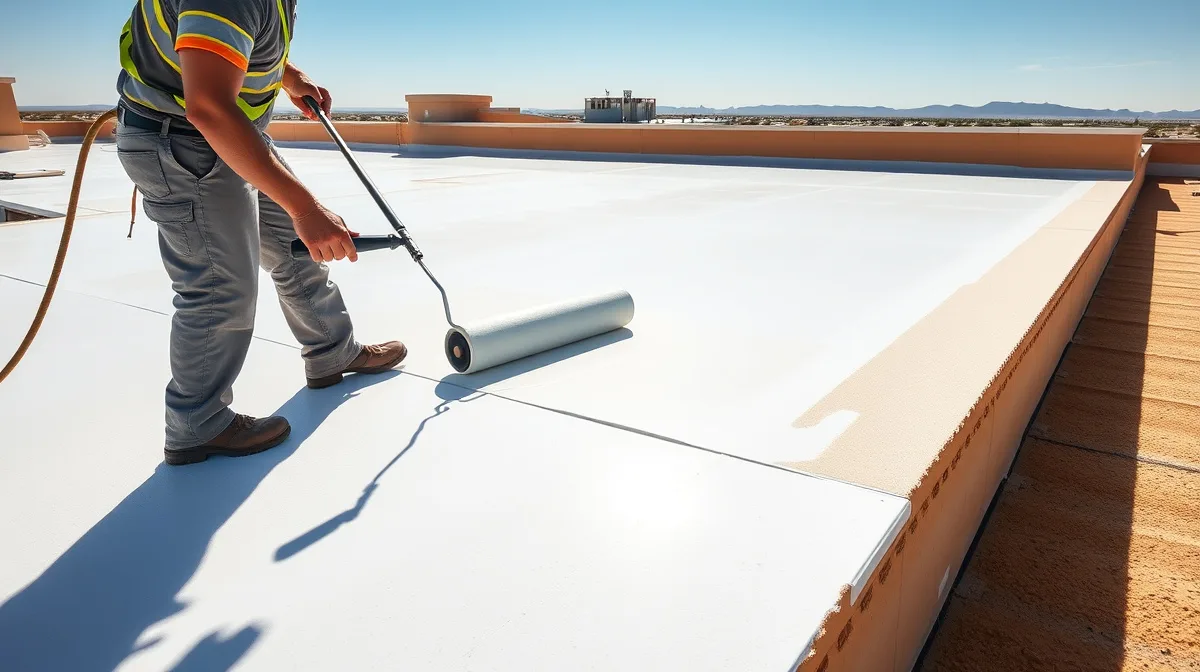
If you already have a spray polyurethane foam (SPF) roof, the foam itself usually isn't the part wearing out — the protective topcoat sitting on top of it is. Arizona's sun is relentless on flat and low-slope roofs, and after roughly 10 to 20 years even a well-installed silicone or acrylic coating starts to chalk, thin, and lose the reflectivity that's been keeping the building cooler and the foam substrate protected underneath. Recoating is the maintenance step that resets that clock: we clean the surface, address any minor foam damage found along the way, and apply a fresh topcoat system rated for another decade or two of Arizona sun, heat cycling, and monsoon rain. Done on schedule, recoating is what keeps an SPF roof warrantied and watertight for its full 40-50+ year rated lifespan — the foam core doesn't degrade on its own, but a foam roof left unprotected past its recoat window eventually will. This is the service call for owners who already have a foam roof and are starting to notice chalking, fading, or the first signs of wear where water tends to collect.
The economics are what make recoating one of the better-value moves in Arizona roofing. Instead of a full tear-off and replacement, a recoat renews the entire waterproofing and reflective surface at a fraction of new-install cost — typically $3 to $5 per square foot, compared to $6 to $12 per square foot for a new residential or light-commercial SPF system. For homeowners and facility managers alike, that difference compounds over a building's life: two or three recoat cycles can carry a single foam roof well past 40 years for less than the cost of one full replacement. We start every recoat job by inspecting the existing foam for soft spots, punctures, or ponding-water damage, spot-repair anything that needs it, then select and apply the topcoat system — silicone or acrylic — that fits your roof's exposure, drainage, and budget. Whether your coating is just starting to chalk or it's been well over a decade since the last recoat, we'll give you a straight read on where your roof actually stands before any work begins.
Why property owners choose it
- Recoating typically costs $3 to $5 per square foot — a fraction of the $6 to $12 per square foot required for a full new SPF roof installation.
- A fresh silicone or acrylic topcoat resets the foam roof's protection and helps keep the manufacturer's warranty active for another 10 to 20 years.
- New reflective coatings restore the roof's solar reflectivity, helping cut cooling costs during Arizona's extreme summer heat.
- Recoating avoids the disruption, debris, and landfill waste of a full tear-off since the existing foam substrate stays in place and in service.
- Punctures, seam wear, and ponding-water damage get spot-repaired as part of the recoat process, catching small problems before they become leaks.
- A properly maintained recoat cycle is what actually delivers on the 40-50+ year lifespan SPF roofing is rated for.
The 10-20 Year Recoat Cycle: Why the Topcoat, Not the Foam, Wears Out
The spray polyurethane foam core of your roof is a closed-cell insulating membrane that, protected properly, holds up under Arizona's sun for decades. What actually wears is the silicone or acrylic topcoat sprayed over it — the layer absorbing UV radiation, roof-surface temperatures that can climb past 150°F, and the physical wear of monsoon downpours and windblown debris every summer. Most topcoat systems are rated for 10 to 20 years before recoating is needed to keep the underlying foam under warranty and fully protected. Skip that window and the coating thins to the point the foam beneath it starts absorbing moisture and UV directly, which is when small surface issues turn into real leaks and foam degradation that costs far more to fix than a routine recoat would have.
That's why we treat the recoat interval as a maintenance milestone rather than a sales pitch — the actual timeline depends on sun exposure, roof slope, foliage or dust buildup, and whether the roof has been getting the periodic inspections that catch minor wear early. A south- or west-facing commercial roof baking under direct Arizona sun all afternoon will typically wear its topcoat faster than a shaded or partially screened section, which is why we check thickness in multiple zones rather than assuming uniform wear across the whole deck. We check topcoat thickness and condition as part of every inspection, so you know where your roof actually stands rather than just how old it is.
- Visible chalking or a powdery residue when you run a hand across the surface
- Fading, discoloration, or loss of the coating's original white or reflective finish
- Hairline cracking or thin spots, especially along seams and parapet walls
- Areas where the coating looks worn through faster near ponding or low spots
Silicone vs. Acrylic: Choosing the Right Topcoat for Your Roof
Silicone and acrylic are the two topcoat systems we install most often on Arizona SPF roofs, and the right call depends on your roof's drainage, exposure, and budget. Silicone is the stronger performer against the two things Arizona roofs deal with most: intense, sustained UV exposure and standing water. It doesn't break down under ponding the way acrylic can, which makes it the better choice for roofs with poor drainage, parapet-walled commercial decks, or any low spot that holds water after a monsoon storm — at a higher material cost per square foot.
Acrylic coatings cost less up front and still offer strong reflectivity and UV resistance of their own, making them a solid fit for roofs with good slope-to-drain and no persistent ponding — you get most of the reflective, protective benefit at a lower price point. Both systems come in reflective white and light-tone finishes that do the real work of cutting a roof's surface temperature and cooling load during Arizona summers. We'll walk your roof, see how it drains after rain, and recommend the system that matches what your roof actually needs rather than defaulting to one option regardless of fit.
- Silicone: stronger ponding-water resistance, higher up-front cost, best for poor-drainage or flat commercial decks
- Acrylic: lower cost, strong UV reflectivity, best for roofs with good slope-to-drain and minimal standing water
- Both offer reflective finishes that reduce cooling load during Arizona summers
Recoating vs. Tear-Off: Why Renewing the Topcoat Costs a Fraction of Replacement
A full roof tear-off and replacement makes sense when the foam substrate itself is compromised — widespread moisture saturation, structural damage, or foam that's been neglected well past its recoat window. But for the large majority of existing SPF roofs we inspect, the foam underneath is still sound; it's only the topcoat that's aged out. In that case, recoating renews the entire waterproofing and reflective surface at $3 to $5 per square foot, compared to $6 to $12 per square foot to tear off and install an entirely new system. That's not a marginal difference — it's often the gap between a same-week maintenance job and a multi-week capital replacement project.
Recoating also keeps the existing foam's insulation value in service instead of sending a functional roof substrate to the landfill, and it avoids the disruption of a tear-off entirely — no demolition phase, no exposed deck sitting open to monsoon weather, and for commercial buildings, no forcing tenants or operations to work around an open-roof job site. The only way to know which category your roof falls into is an on-site inspection: we check foam moisture content, look for soft or delaminated areas, and give you a straight answer on whether a recoat will do the job or whether tear-off is the honest recommendation. Most of the existing foam roofs we're called out to inspect end up in the recoat category, which is exactly why we lead with an honest assessment instead of assuming the bigger job.
Ideal for
- Owners whose existing foam roof topcoat is visibly chalking, thinning, or discolored
- Commercial and residential SPF roofs approaching or past their 10-20 year recoat window
- Facility managers looking to extend roof life without a capital-intensive tear-off project
- Owners noticing early ponding-water wear or minor foam surface damage
- Anyone told during a roof inspection that the coating — not the foam — needs attention
What affects the cost
Foam Roof Recoating questions, answered
Most SPF roof topcoats are rated for 10 to 20 years before they need to be renewed, depending on the coating system, roof exposure, and how the roof has been maintained in between. We check actual coating thickness and condition during an inspection rather than going by age alone.
Once the topcoat thins past its protective threshold, the foam underneath starts absorbing UV and moisture directly, leading to foam degradation, leaks, and repair costs well beyond what a routine recoat would have cost. It also puts the roof's manufacturer warranty at risk.
Silicone holds up better against ponding water and Arizona's intense, sustained UV exposure, making it the stronger choice for roofs with drainage issues or flat commercial decks. Acrylic costs less and performs well on roofs with good slope-to-drain and no persistent standing water.
Recoating typically runs $3 to $5 per square foot depending on roof condition, coating type, and any spot repairs needed before the new topcoat goes on. We provide a firm number after a free on-site inspection since every roof's condition is different.
Minor punctures, seam issues, or small ponding-damage spots can often be patched without a full recoat if caught early. During an inspection we'll tell you honestly whether spot repair buys you more time or the topcoat is worn enough overall that a full recoat is the better value.
Foam Roof Recoating done right, by a dedicated Arizona SPF crew
Foam Roof Recoating isn't a commodity — the result depends entirely on how carefully it's planned and applied for your specific property and Arizona's heat-and-monsoon climate. We assess what your roof actually needs, prep the substrate properly, and apply to the depth and tapering your roof requires, so the work delivers the durability and savings it's supposed to. No shortcuts, no builder-grade rush.
We serve the greater Phoenix metro — Scottsdale, Mesa, Tempe, Chandler, Gilbert, Glendale, Peoria, Surprise, Avondale, Goodyear, and Queen Creek — plus Tucson and Casa Grande. Every job starts with a free, no-pressure roof inspection.
Just as important, we treat your roof like the system it is. Substrate condition, foam depth, slope-to-drain tapering, and topcoat selection all interact, and getting one right while ignoring the others leaves durability and savings on the table. When we scope your foam roof recoating, we look at how it fits the whole picture — so the finished result performs the way it should, holds up through both 150°F+ summer roof temperatures and monsoon-season downpours, and actually lowers the cooling costs you feel every month. That whole-roof mindset, plus honest advice about what your property truly needs, is what Arizona property owners count on us for.
Free inspection
We evaluate your roof and give you a clear, itemized quote with no pressure.
Expert application
We prep, tape, and apply your foam roof recoating to spec — clean and on schedule.
A roof you can trust
A durable, energy-efficient roof and a clear recoat schedule to keep it under warranty.
Related services
Ready for a free foam roof recoating quote?
Tell us about your property and we'll put together a clear, no-pressure spray foam roofing quote — commercial or residential, anywhere in the Valley or Tucson.