How Much Does Spray Foam Roofing Cost in Arizona in 2026? (Full Pricing Guide)
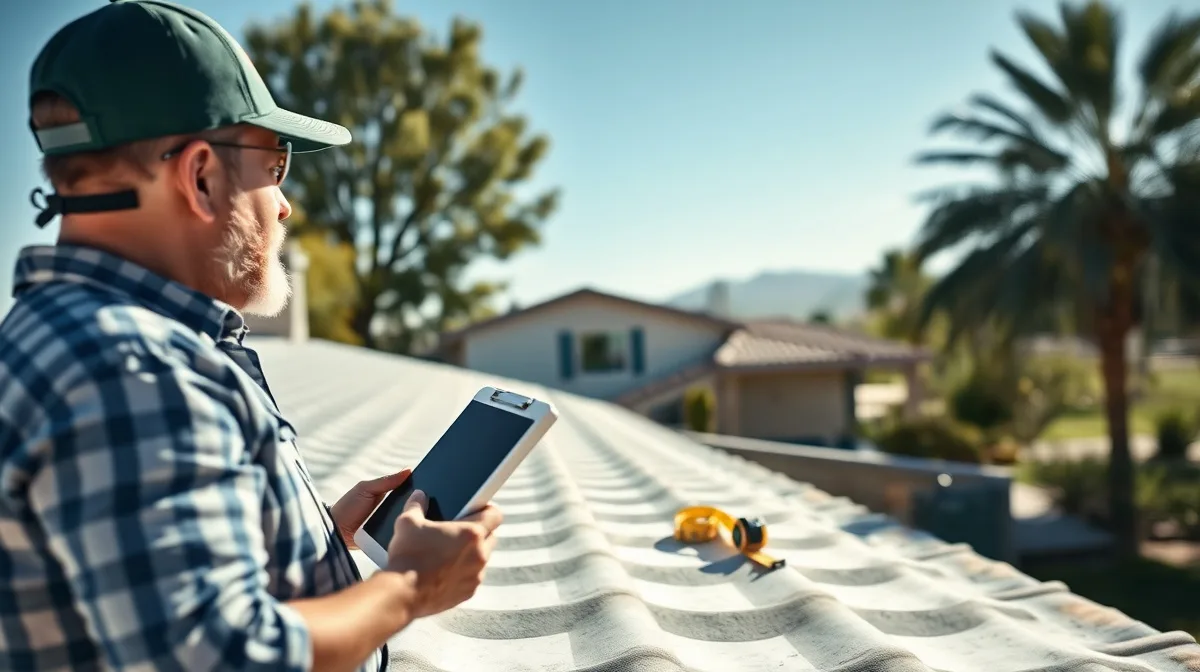
If you've started calling around about spray foam roofing in Arizona, you've probably noticed something frustrating: nobody wants to give you a straight number. That's not because contractors are dodging the question — it's because SPF (spray polyurethane foam) roofing genuinely doesn't price like a shingle job where you can quote per square sight unseen. A flat commercial deck in Chandler with a straightforward recoat and a torn-up residential flat roof in Tucson that needs a full tear-off are different jobs with different costs, even if they're the same square footage. This guide breaks down real 2026 pricing ranges for Arizona spray foam roofing — new installation, commercial applications, and recoating — plus every factor that pushes a bid up or down, so you walk into your estimate call already knowing what questions matter.
We work on flat and low-slope roofs across the Phoenix metro — Scottsdale, Mesa, Tempe, Chandler, Gilbert, Glendale, Peoria, Surprise, Avondale, Goodyear, Queen Creek — plus Tucson and Casa Grande, and the numbers below reflect what we're actually seeing on jobs in this market right now, not a generic national average pulled from a roofing trade publication. Arizona's climate — brutal summer heat, intense UV, and a monsoon season that dumps heavy rain in short bursts — also affects pricing in ways that don't show up in cost guides written for other parts of the country, and we'll call those out as we go.
Spray Foam Roofing Cost by Project Type
The single biggest driver of your price is which of these three buckets your project falls into. SPF pricing is almost always quoted per square foot of roof deck, and the range is wide because "spray foam roof" covers everything from a 900 square foot patio casita to a 200,000 square foot distribution center.
- New SPF installation — residential and light commercial: $6 to $12 per square foot. This covers full new foam roof systems on homes, small offices, retail buildings, and similar structures, including substrate prep, foam application, and protective topcoat.
- New SPF installation — larger commercial buildings: $3.50 to $8 per square foot. Bigger roofs benefit from scale — more square footage spreads mobilization, equipment setup, and crew time over more area, which is why large warehouses and industrial buildings often land at a lower per-square-foot rate than a small residential job even though the total project cost is much higher.
- Recoating an existing SPF roof: $3 to $5 per square foot. This is a maintenance-cycle cost, not a full re-roof — you're refreshing the protective topcoat on foam that's already there and structurally sound, which is why it costs a fraction of new installation.
Some contractors in this trade quote per "square" instead of per square foot — a roofing square equals 100 square feet, a convention carried over from asphalt shingle and built-up roofing estimating. If someone quotes you "$600 to $1,200 per square," that's the same $6 to $12 per square foot range, just expressed differently. Always ask which convention a bid is using before you compare two quotes side by side — mixing up square footage and roofing squares is the single most common way people misread a foam roofing estimate and think one contractor is dramatically cheaper than another when they're actually quoting the same thing two different ways.
Material vs. Labor: Where the Money Actually Goes
On a typical SPF roofing project, materials — the foam itself, the protective topcoat (silicone or acrylic), primers, flashing materials, and granules or aggregate if specified — generally account for roughly 40 to 50 percent of total project cost. Labor, equipment, and mobilization make up the rest. That labor share is higher than a lot of homeowners expect, but it reflects what SPF actually is: a monolithic, seamless roofing system that's sprayed and shaped on-site by a licensed crew, not a pre-manufactured membrane that gets rolled out and seamed. The foam is applied in careful lifts to a specified thickness, tapered to create positive drainage (slope-to-drain), and then coated — all of it skilled, weather-dependent field work rather than a product installation.
This split also explains why cutting corners on labor is a false economy. A crew that under-applies foam thickness or skips proper tapering can save a few dollars per square foot up front, but the result is a roof with ponding water, uneven wear, and a shortened lifespan — problems that cost far more to fix later than they saved during installation. When you're comparing bids, a price that's noticeably below the ranges in this guide is worth asking hard questions about, not celebrating.
What Actually Moves Your Price Up or Down
Within any given project type, the price you get can still swing by several dollars per square foot depending on the specifics of your roof. Here's what we actually look at during an inspection, and how each factor affects the number.
Roof Condition and Whether Tear-Off Is Needed
SPF's biggest cost advantage over traditional re-roofing is that it can often be sprayed directly over a existing compatible roof — a re-cover — instead of requiring a full tear-off. Re-covering skips the labor and disposal cost of stripping the old roof down to the deck, and it keeps old roofing material out of the landfill. But re-cover only works when the existing substrate is structurally sound, reasonably dry, and compatible with foam adhesion. If a roof has widespread saturated insulation, structural deck damage, or multiple layers of old roofing already stacked on it, tear-off becomes the safer and often the required option. Tear-off adds real cost — demolition labor, dumpster and disposal fees, and sometimes deck repair or replacement before foam can even be applied — so a roof in rough shape will price meaningfully higher than a comparable roof that only needs a clean re-cover.
Foam Thickness and Slope-to-Drain Tapering
Foam depth isn't one-size-fits-all. Thicker foam adds R-value and can correct for an aging, uneven deck, but it also uses more material and more spray passes, which adds cost. The bigger factor on many Arizona commercial roofs, though, is tapering — building up foam in a calculated slope so water actually moves to drains instead of pooling. Dead-flat commercial decks (extremely common in Arizona's industrial and retail stock) often need custom tapered foam designs to eliminate ponding water, which is one of the fastest ways a roof coating fails prematurely. A roof that needs significant tapering work to fix a drainage problem will cost more than one that just needs a standard, consistent foam depth across a deck that already drains reasonably well.
Access and Height
How a crew gets people, equipment, and foam rig hoses onto your roof affects labor time and equipment cost. A single-story building with straightforward ground access is the cheapest scenario. Multi-story commercial buildings, roofs with limited crane or lift staging area, occupied buildings that require protecting walkways and entrances during spraying, or sites with tricky parking and equipment logistics all add setup time and sometimes require specialized lift equipment — all of which shows up in the bid.
Warranty Length
Foam roofing warranties are typically tied to foam thickness and topcoat specification, and longer warranty terms generally mean a higher-spec system — thicker foam, a premium topcoat, or both. A roof quoted with a longer warranty period isn't just paying for a piece of paper; it reflects a system built to a spec that's expected to perform for that length of time with normal maintenance and on-schedule recoating.
Coating Type: Silicone vs. Acrylic
The protective topcoat over the foam is where a lot of the performance differences — and some of the price differences — show up. Silicone coatings generally cost more than acrylic but hold up better against UV exposure and ponding water without softening, which matters on Arizona's dead-flat commercial roofs where some ponding is difficult to fully eliminate even with good tapering. Acrylic coatings cost less and perform very well on roofs with good drainage and no standing water, but they're more moisture-sensitive during cure and less forgiving of ponding over time. Neither is universally "better" — the right call depends on your specific roof's drainage, sun exposure, and budget, which is exactly the kind of judgment call that should come out of an inspection rather than a guess.
Recoating: The Cost That Protects Your Investment
One of the most overlooked numbers in SPF roofing economics is the recoat, and it deserves its own explanation because it's central to why foam roofing pencils out well over the long run. The foam itself, properly installed, is commonly rated for 40 to 50-plus years of service life, and the foam doesn't meaningfully degrade over that time. What does wear is the protective topcoat sitting on top of it — the layer taking the direct hit from Arizona's UV exposure and heat cycling year after year. Recoating that topcoat roughly every 10 to 20 years, at a cost of $3 to $5 per square foot, is what keeps the underlying foam protected and keeps the roof under warranty indefinitely. Skip a scheduled recoat and the topcoat eventually degrades to the point where UV and moisture can start reaching the foam itself, which is a far more expensive problem to fix than a routine recoat would have been. Budgeting for recoats on a 10 to 20-year cycle is, dollar for dollar, one of the best-value maintenance decisions a property owner can make on any roof type in this climate.
Financing Considerations
A full SPF installation on a larger commercial building is a significant capital expense, and it's worth thinking about financing structure alongside the per-square-foot number. A few things to factor in when you're budgeting:
- Total project cost, not just the per-square-foot rate, is what matters for financing decisions — a low per-foot price on a huge roof can still be a bigger total outlay than a higher per-foot price on a small one.
- Recoat cycles are a predictable, budgetable maintenance expense rather than a surprise — building the 10 to 20-year recoat into a facility's capital planning avoids treating it as an emergency line item later.
- Energy savings from foam's insulation value and reflective topcoats can offset ongoing utility costs over time, which is worth factoring into a payback-period conversation even though it isn't part of the upfront installation price.
- If utility rebate programs are available in your area for reflective or energy-efficient roofing, ask your contractor to confirm current program details directly — rebate programs and dollar amounts change, so don't budget against a number you saw somewhere online without verifying it's still active.
- Commercial property owners and facility managers should ask whether a contractor offers phased installation across multiple roof sections, which can spread cost over more than one budget cycle for large properties.
Spray Foam vs. Traditional Re-Roofing: How the Costs Compare
Spray foam almost always looks more expensive than a traditional roofing system on day one, and on a straight materials-and-labor comparison for a single install, that's often true. Where the comparison flips is over the life of the roof, because SPF and traditional systems age completely differently. A membrane roof — TPO, EPDM, or a built-up (tar-and-gravel) system — has a finite service life measured in seams, membrane thickness, and ballast condition, and when it fails, it typically fails as a full system: the whole membrane needs replacement. SPF, by contrast, is a monolithic surface with no seams to fail, and its long-term maintenance is a recoat rather than a full tear-off and replacement.
- TPO (thermoplastic polyolefin): Lower upfront cost than SPF in many cases, reflective white membrane option, but seamed installation means every seam is a potential failure point, and typical service life runs shorter than a well-maintained SPF roof before full replacement is needed.
- EPDM (rubber membrane): Durable and a long-standing commercial standard, but it's typically black (higher heat absorption unless a white topcoat is added), seamed like TPO, and repairs to punctures or seam failures are patch-based rather than a full-surface renewal the way an SPF recoat is.
- Built-up roofing (tar and gravel): Historically common on Arizona flat roofs, heavy and multi-layered, generally a higher-maintenance system in extreme heat cycling, and difficult to spot-repair cleanly compared to foam.
- Spray polyurethane foam (SPF): Highest upfront cost per square foot in many direct comparisons, but seamless application eliminates seam failure as a mode of roof failure, foam itself is rated 40 to 50-plus years, and a scheduled $3 to $5 per square foot recoat every 10 to 20 years — instead of a full system replacement — is what keeps the total cost of ownership favorable over a multi-decade horizon.
- Repairability: This is where foam has a structural cost advantage that's easy to underweight — a punctured or hail-dinged section of foam roof can typically be spot-repaired, while a comparable failure on a seamed membrane system often requires a larger patch or section replacement to restore a reliable seal.
Put simply: if you're only pricing the next five years, a membrane system may come in cheaper. If you're pricing the next 20 to 40 years — which is the realistic ownership horizon for most commercial buildings and long-term homeowners in the Valley and in Tucson — SPF's combination of a long-rated foam life, seamless failure resistance, and comparatively inexpensive recoat cycle usually wins the total cost of ownership comparison, even though it costs more to install on day one.
Why Real Pricing Always Requires an On-Site Inspection
Every range in this guide is exactly that — a range, built from real market pricing, not a quote you can hand someone and expect them to honor. The only way to know your actual number is for a contractor to walk your roof: check the deck condition, measure existing drainage and identify low spots that need tapering, assess access and height, confirm whether re-cover is viable or tear-off is required, and talk through coating and warranty options against your budget and how long you plan to own the property. Two roofs with identical square footage can land at meaningfully different prices once all of that is accounted for, and no amount of online research replaces having someone qualified physically look at your roof.
The Bottom Line
For 2026, expect new residential and light commercial SPF installation to run $6 to $12 per square foot, larger commercial installations to run $3.50 to $8 per square foot, and recoating an existing foam roof to run $3 to $5 per square foot. Where you land inside those ranges depends on roof condition and whether tear-off is needed, foam thickness and tapering complexity, access and building height, warranty length, and whether you specify silicone or acrylic topcoat. Compared against TPO, EPDM, and built-up re-roofing, SPF typically costs more to install but wins on long-term total cost of ownership thanks to its rated 40 to 50-plus year foam life and its comparatively low-cost recoat maintenance cycle instead of full system replacement. The single best move you can make before committing to any number, from us or anyone else, is booking a free on-site inspection so your estimate reflects your actual roof — not an average.
Frequently asked questions
For 2026, new residential and light commercial SPF installation typically runs $6 to $12 per square foot, larger commercial projects run $3.50 to $8 per square foot, and recoating an existing foam roof runs $3 to $5 per square foot. Your exact price depends on roof condition, access, foam thickness, and coating choice, which is why a firm number always comes from an on-site inspection.
Upfront, yes — SPF usually costs more per square foot to install than TPO, EPDM, or built-up roofing. Over the roof's full life, foam's seamless design, 40 to 50-plus year rated lifespan, and relatively inexpensive recoat cycle (versus full membrane replacement) often make its total cost of ownership more favorable, especially on a 20-plus year ownership horizon.
Because the base per-square-foot rate is only the starting point. Roof condition and whether tear-off is required, foam thickness and slope-to-drain tapering complexity, access and building height, warranty length, and coating type (silicone vs. acrylic) all stack on top of that base rate, so two roofs of the same size can price very differently once those factors are accounted for.
Yes — recoating runs $3 to $5 per square foot roughly every 10 to 20 years and refreshes only the protective topcoat, since the foam itself doesn't meaningfully degrade when maintained. That's a fraction of the cost of a full new installation, which is why staying on a recoat schedule is one of the best-value maintenance decisions a property owner can make.
Not a firm one. Online ranges like the ones in this guide are useful for budgeting, but real pricing depends on details only visible on-site — deck condition, existing drainage and ponding, access constraints, and whether re-cover or tear-off is the right call. We offer free on-site inspections and estimates so you get a number based on your actual roof.
Ready for a free roof quote?
Tell us about your roof and we'll build a clear, no-pressure quote.