Energy-Efficient Cool Roof Coatings for Arizona Homes & Buildings
A reflective, high-R-value spray foam roof system turns your roof from a heat collector into a heat rejector — cutting the cooling load that drives your summer utility bill.
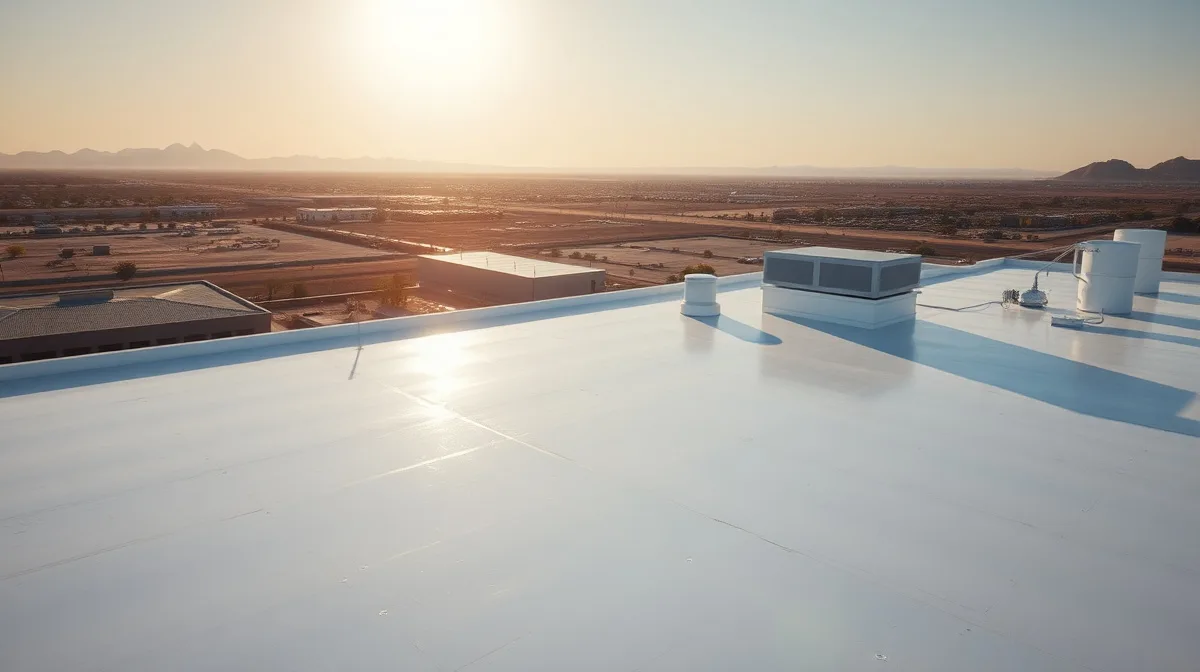
In the Phoenix and Tucson metros, the roof isn't just a weather barrier — it's the single biggest driver of your cooling bill. A dark or aged roof surface can hit 150°F-plus on a July afternoon, and every degree of that heat has to be pushed back out by your HVAC system. Spray polyurethane foam (SPF) roofing attacks that problem from two directions at once: the foam itself is a continuous, high-R-value insulation layer with no seams or fasteners for heat to sneak through, and the protective topcoat over it is a reflective, light-colored (typically white) finish engineered to bounce solar radiation instead of absorbing it.
That combination is why SPF is increasingly the roofing system of choice for Arizona building owners who actually track their energy spend — not because it's trendy, but because it's the only common low-slope roofing assembly that adds meaningful R-value across the whole roof deck while also dropping surface temperatures dramatically. Homeowners feel it as a cooler attic and a less overworked AC unit; commercial and facility managers feel it as a measurable line-item drop in summer utility spend across a portfolio of buildings. This page walks through how the reflectivity and insulation actually work together, what to expect for energy impact, and how utility rebate programs fit into the picture — without us inventing numbers we can't stand behind.
Why property owners choose it
- Reflective white or light-colored topcoats reject solar heat instead of absorbing it, dropping roof surface temperatures dramatically compared to dark membrane or shingle roofs.
- SPF's closed-cell foam adds continuous, seamless insulation directly at the roof deck, eliminating the thermal bridging that happens at seams and fasteners in other systems.
- Lower roof surface and attic temperatures mean your air conditioning system cycles less during peak summer afternoons, directly reducing cooling-related utility costs.
- A cooler, less-stressed roofing membrane experiences less thermal expansion and contraction, which extends the service life of the entire roof system.
- Many Arizona utilities offer energy-efficiency or cool-roof incentive programs that may apply to a reflective SPF roof — we'll help you confirm current eligibility and paperwork.
- The energy benefit is built into the system permanently — there's no separate reflective product to maintain beyond the normal recoat cycle every 10-20 years.
How Reflectivity and R-Value Work Together
A roof's energy performance comes down to two separate properties, and SPF is one of the few systems that addresses both at once. Reflectivity (and its companion, thermal emittance) determines how much solar energy bounces off the roof surface versus getting absorbed into the building. A white or light-colored silicone or acrylic topcoat over spray foam is formulated specifically for high reflectivity — it's the same principle behind painting a roof white in the desert, but engineered as a durable, UV-stable coating rather than ordinary paint.
R-value, on the other hand, is about what happens to the heat that does make it through the surface. This is where SPF pulls ahead of almost every other roofing option: because it's sprayed on as a liquid that expands and cures into a continuous foam layer, there are no seams, no mechanical fasteners, and no gaps where heat can bridge through. Traditional insulation batts and rigid board systems lose R-value at every seam and fastener penetration; SPF doesn't have those weak points. The result is a roof assembly that reflects most incoming solar energy away, then insulates against whatever heat does transfer — a combination that's hard to match with membrane, shingle, or tile systems alone.
- Reflective topcoat bounces solar radiation before it becomes heat load
- Closed-cell foam has no seams or fasteners for thermal bridging
- Sprayed-on application follows the exact contours of the roof deck
- Combined effect works on both flat commercial roofs and sloped residential roofs
What This Means for Your Cooling Bill
The practical effect of a cooler, better-insulated roof shows up where it matters most in Arizona: the air conditioning run time during peak summer months. When the roof surface and attic space stay significantly cooler, your HVAC system isn't fighting as much conducted and radiant heat load, which means shorter cycles, less strain on the equipment, and a lower cooling bill over the June-through-September stretch. This effect compounds on buildings with large, exposed roof areas — warehouses, retail boxes, and single-story homes with substantial attic footprints — where the roof is doing more of the thermal work relative to the walls.
We won't hand you a projected dollar savings figure, because actual results depend on your existing roof condition, insulation levels, HVAC efficiency, building orientation, and how the space is used — a vacant warehouse behaves differently than an occupied retail space. What we can tell you with confidence is the physics is real and well-documented in the roofing industry, which is exactly why reflective, high-R-value roofing is the basis for most cool-roof energy programs in the first place. During your free on-site estimate, we'll look at your specific roof and give you a straight read on what to realistically expect.
Utility Rebates and Energy-Efficiency Programs
A number of Arizona utilities and energy-efficiency programs offer incentives tied to cool-roof or reflective roofing installations, since reducing peak summer cooling demand benefits the grid as much as it benefits your bill. These programs change over time — eligibility requirements, rebate amounts, and application windows are set by the utility or program administrator, not by us — so we're not going to quote you a specific dollar figure or promise a particular program will apply to your project. What we will do is help you identify which programs might currently be relevant to your property and point you toward confirming the current details directly with the administering utility before you count on any incentive.
If energy incentives are a deciding factor in your roofing decision, bring it up during your estimate. We can spec the coating and installation to match common program documentation requirements (reflectivity ratings, R-value documentation, licensed-contractor installation) so you're not scrambling to retrofit paperwork after the fact. Just don't take any rebate as guaranteed until you've confirmed it with the program directly — programs get updated, paused, or restructured, and we'd rather you have accurate current information than a number we made up.
Ideal for
- Homeowners in the Phoenix or Tucson metro who want a cooler attic and lower summer electric bills without changing how the house looks from the street.
- Commercial and industrial building owners who track utility spend across one or more properties and want a roofing system that pulls its weight on the energy line.
- Property and facility managers evaluating cool-roof or energy-efficiency incentive programs who need a roofing partner familiar with reflective coating specs.
- Owners of older flat or low-slope roofs with dark or degraded membranes currently absorbing significant solar heat.
- Anyone re-roofing or recoating who wants the reflectivity and insulation value built in from day one rather than added as an afterthought.
What affects the cost
Cool Roof Coatings questions, answered
A dark, aged roof surface in Phoenix or Tucson can reach well over 150°F on a summer afternoon, while a properly coated reflective SPF roof runs dramatically cooler because it's rejecting rather than absorbing solar heat. The exact gap depends on the specific topcoat and roof orientation, which we can walk through during your on-site estimate.
It should reduce the cooling load your HVAC system has to fight, especially during peak summer months, but the actual dollar impact depends on your building's insulation, HVAC efficiency, and usage patterns. We don't project specific savings figures — we'll give you an honest assessment of your roof rather than a marketing number.
White delivers the highest reflectivity and is the most common choice for maximizing energy performance, but some light colors can still qualify for cool-roof benefits depending on the specific coating product and program requirements. We'll help you weigh appearance preferences against reflectivity performance.
Some Arizona utilities and energy-efficiency programs do offer incentives tied to reflective roofing, but program availability and rebate amounts change over time and vary by provider. Confirm current program details directly with your utility before counting on a specific incentive — we can help point you to what's currently relevant to your property.
The topcoat is the wear layer of the system and its reflectivity does gradually diminish with UV exposure, which is why recoating roughly every 10-20 years keeps both the warranty and the energy performance intact. Regular inspection lets us catch reflectivity loss before it meaningfully affects your cooling costs.
Cool Roof Coatings done right, by a dedicated Arizona SPF crew
Cool Roof Coatings isn't a commodity — the result depends entirely on how carefully it's planned and applied for your specific property and Arizona's heat-and-monsoon climate. We assess what your roof actually needs, prep the substrate properly, and apply to the depth and tapering your roof requires, so the work delivers the durability and savings it's supposed to. No shortcuts, no builder-grade rush.
We serve the greater Phoenix metro — Scottsdale, Mesa, Tempe, Chandler, Gilbert, Glendale, Peoria, Surprise, Avondale, Goodyear, and Queen Creek — plus Tucson and Casa Grande. Every job starts with a free, no-pressure roof inspection.
Just as important, we treat your roof like the system it is. Substrate condition, foam depth, slope-to-drain tapering, and topcoat selection all interact, and getting one right while ignoring the others leaves durability and savings on the table. When we scope your cool roof coatings, we look at how it fits the whole picture — so the finished result performs the way it should, holds up through both 150°F+ summer roof temperatures and monsoon-season downpours, and actually lowers the cooling costs you feel every month. That whole-roof mindset, plus honest advice about what your property truly needs, is what Arizona property owners count on us for.
Free inspection
We evaluate your roof and give you a clear, itemized quote with no pressure.
Expert application
We prep, tape, and apply your cool roof coatings to spec — clean and on schedule.
A roof you can trust
A durable, energy-efficient roof and a clear recoat schedule to keep it under warranty.
Related services
Ready for a free cool roof coatings quote?
Tell us about your property and we'll put together a clear, no-pressure spray foam roofing quote — commercial or residential, anywhere in the Valley or Tucson.